What Is the Best Beverage Stabilizer Supplier in China?

Time:2026-10-09 Author:Sienna
0%

What Is the Best Beverage Stabilizer Supplier in China?

Choosing the best Beverage Stabilizer supplier in China requires more than comparing prices. A stable drink must survive mixing, filling, transport, storage, and pouring. It should also keep its texture, appearance, and flavor consistent. A cloudy fruit drink may separate after one week. A dairy beverage may develop sediment around the bottle neck. These small failures can damage consumer confidence quickly.

Professor David Julian McClements, a respected food colloid scientist, offers a useful principle: “Food structure depends on interactions between ingredients.” This idea matters when evaluating a Chinese supplier. A reliable manufacturer should understand how stabilizers interact with proteins, acids, minerals, sweeteners, and flavors. Technical experience is visible in practical details. Can the supplier recommend a suitable hydrocolloid blend? Can it provide application data for your beverage type? Can it explain dosage changes during pilot trials?

Testing matters more than confident promises.

Strong suppliers usually provide clear specifications, batch records, allergen information, and safety documentation. They should also support laboratory trials and production-scale validation. Certifications can help, but certificates alone do not prove performance. Samples must be tested under realistic conditions, including heat, cold storage, shaking, and extended shelf life.

There is no perfect supplier.

Some factories offer impressive documentation but limited formulation support. Others respond quickly but lack consistent batch control. Therefore, buyers should examine communication, technical knowledge, production capacity, and after-sales service together. The best Beverage Stabilizer supplier in China is not always the cheapest. It is the partner that delivers repeatable quality, honest limitations, and measurable results. Some uncertainty remains, and that deserves careful review.
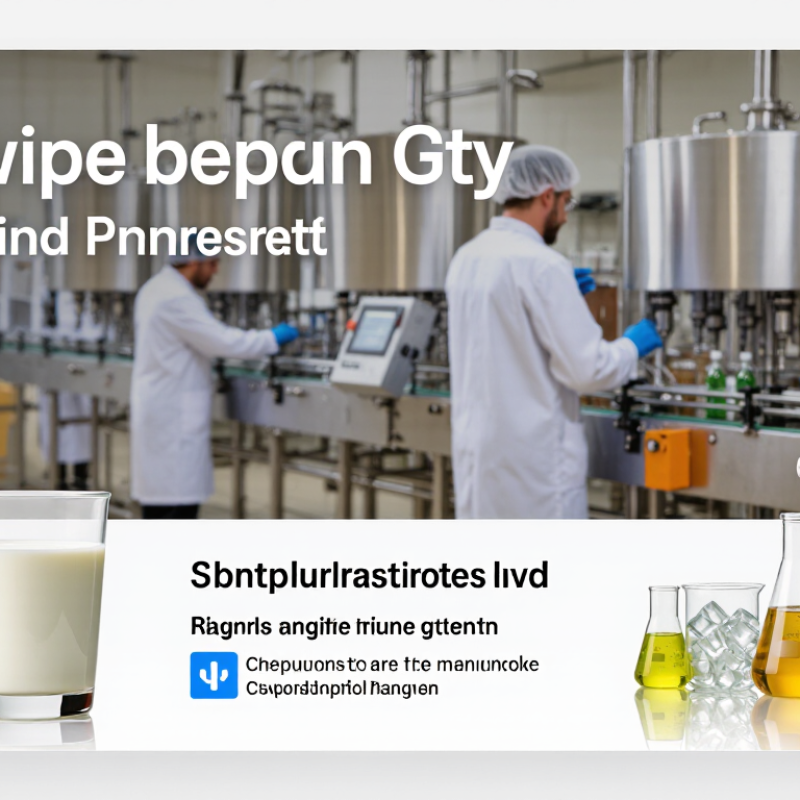
What Is the Best Beverage Stabilizer Supplier in China?

What Is a Beverage Stabilizer and Why Does It Matter?

A beverage stabilizer is a functional ingredient that helps a drink remain uniform, smooth, and visually appealing. It can control sedimentation, reduce separation, and improve mouthfeel. In products containing fruit pulp, protein, minerals, or plant extracts, this support becomes especially important.

In practical formulation work, a stable drink must survive mixing, filling, transport, and storage. A bottle may look perfect on production day, then develop a visible layer after two weeks. That small change can affect consumer trust. Stabilizers such as pectin, gum systems, modified starches, or cellulose-based ingredients may help, but their performance depends on acidity, heat treatment, dosage, and shear conditions.

The best beverage stabilizer supplier in China should offer more than a product catalog. Reliable technical support matters. Ask for clear specifications, batch consistency data, allergen information, and application guidance. Samples should be tested in the actual beverage, not only in water. A supplier should also explain recommended hydration methods and processing limits.

There is no universal solution. A stabilizer that works well in a dairy-style drink may perform poorly in an acidic juice. Overdosing can create a heavy texture, while underdosing may leave sediment. This is where careful trials matter. Some test results can be disappointing, but they often reveal the real formulation problem. Supplier audits, traceable documentation, and responsive communication provide stronger evidence than attractive claims.

Key Factors for Choosing a Chinese Beverage Stabilizer Supplier

What Is the Best Beverage Stabilizer Supplier in China?

Key Factors for Choosing a Chinese Beverage Stabilizer Supplier

The best Chinese beverage stabilizer supplier should offer more than a competitive quotation. Grand View Research estimated the global food stabilizers market exceeded US$3 billion in 2023. Beverage demand is also pushing suppliers toward cleaner labels, improved suspension, and better mouthfeel. Therefore, evaluate technical capability before discussing price.

Ask for a complete specification sheet, allergen statement, certificate of analysis, and batch traceability records. A reliable factory should explain viscosity, hydration temperature, dosage range, and compatibility with acids, minerals, and sweeteners. Check whether its quality system follows recognized standards, such as ISO 22000, FSSC 22000, or HACCP. Certificates alone are not enough. Review their testing process.

Request samples from at least three production lots. Test them in your actual formula, not only in laboratory water. Observe sediment after storage, separation after transport, and texture after pasteurization. A 2024 analysis by Mordor Intelligence identifies beverage applications as an important growth area for food stabilizers, but market growth does not guarantee consistent supply. Low prices can hide weak documentation or unstable raw materials.

Supplier communication matters too. Can the technical team answer precise questions quickly? Can it provide pilot-scale support and realistic lead times? Inspect the facility when possible. Photos may be outdated. I would also negotiate a change-control agreement covering raw materials, processing, and packaging. That step is easy to overlook, yet one unnoticed change can alter a drink’s texture.

How to Evaluate Product Quality, Safety, and Certifications

Choosing the best beverage stabilizer supplier in China requires more than comparing prices. Product quality should remain consistent across batches, especially in acidic drinks, dairy beverages, and plant-based formulas. Ask for a detailed specification sheet, including viscosity, moisture, particle size, microbiological limits, and recommended dosage.

Request a recent Certificate of Analysis for each production batch. Compare it with an independently tested sample. Check how the stabilizer performs after heating, cooling, shaking, and several weeks of storage. A clear beverage may become cloudy, form sediment, or develop an unusual mouthfeel. These details reveal practical quality better than advertising claims.

Safety records deserve equal attention. Review food-grade manufacturing controls, allergen statements, traceability procedures, and contamination prevention measures. Confirm relevant certifications through valid documents, not only scanned logos. An audit report, factory address, testing scope, and certificate number should match. Certificates can expire. That matters.

Tips: Ask for a small sample first. Test it in your own beverage base. Record mixing temperature, hydration time, dosage, and storage results. My early mistake was trusting a familiar texture after one day. A good sample still needs longer observation. Suppliers should answer technical questions clearly and provide stable documentation. If replies remain vague, the risk is probably higher. Reliable communication is part of product quality.

Comparing Manufacturing Capacity, Customization, and Technical Support

Choosing the best beverage stabilizer supplier in China requires more than checking price. Manufacturing capacity matters because stable output protects seasonal launches and export schedules. Grand View Research estimates the global beverage stabilizers market will expand at about 5% annually through 2030. That growth increases pressure on suppliers to maintain consistent viscosity, suspension, and taste. A capable factory should show batch records, production lead times, testing equipment, and realistic minimum order quantities. Large capacity is useful, but it does not automatically mean better performance.

Customization separates a trading company from a technical partner. Beverage developers may need different solutions for acidic juice, dairy drinks, plant-based beverages, or high-temperature processing. Ask for pilot samples, hydration instructions, dosage ranges, and stability data after heat and storage tests. According to Innova Market Insights, clean-label and reduced-sugar claims remain strong product-development drivers. This can require blends with fewer recognizable additives, but performance may become less forgiving. I would not accept a “clean label” claim without checking regional labeling rules and finished-product tests.

Tips: Request three samples from different production batches. Compare sediment, mouthfeel, and viscosity after seven, fourteen, and thirty days. Also review ISO or food-safety certification, allergen controls, traceability, and technical response time. A supplier that only sends a certificate may still lack application knowledge. That is an uncomfortable gap worth testing before signing a long-term contract.

What Is the Best Beverage Stabilizer Supplier in China? - Comparing Manufacturing Capacity, Customization, and Technical Support
Evaluation Dimension Supplier Profile 1
Large-Scale Integrated Producer
Supplier Profile 2
Specialty Hydrocolloid Manufacturer
Supplier Profile 3
Flexible Blending Specialist
Supplier Profile 4
Export-Oriented Ingredient Producer
Typical Product Scope Stabilizer systems for dairy drinks, juice beverages, plant-based drinks, and ready-to-drink products. Hydrocolloids and beverage texture systems focused on suspension, mouthfeel, and emulsion stability. Customized premixes combining hydrocolloids, emulsifiers, buffers, and functional ingredients. Standardized beverage stabilizers designed for international shipment and multi-market applications.
Estimated Annual Beverage-Stabilizer Capacity 10,000–30,000 metric tons 3,000–10,000 metric tons 1,000–5,000 metric tons 5,000–15,000 metric tons
Batch Consistency High; automated dosing and standardized production controls are commonly used. High for core hydrocolloid products; formulation complexity may require additional batch verification. Medium to high; performance depends on premix complexity and raw-material control. High for catalog products supported by standardized specifications.
Minimum Order Quantity Typically 500–1,000 kg for standard products; larger quantities preferred. Typically 300–1,000 kg depending on the formulation and packaging format. Typically 100–500 kg for selected customized blends. Typically 500–1,000 kg for export orders.
Sample Development Laboratory samples commonly available within 5–10 working days. Application samples commonly available within 7–14 working days. Small-batch samples commonly available within 3–7 working days. Standard samples commonly available within 5–10 working days.
Customization Capability Viscosity Suspension pH tolerance Heat treatment Texture Emulsion stability Acid resistance Full premix Low dosage Clean-label options Market-specific formulas Allergen control Label support
Common Beverage Applications UHT milk beverages, flavored milk, fruit drinks, plant-based beverages, and nutritional drinks. Acidified milk drinks, juice beverages, protein drinks, emulsified beverages, and suspension systems. Plant-based milk, powdered beverage concentrates, functional drinks, and complex multi-ingredient formulas. Juice drinks, dairy beverages, instant beverage powders, and shelf-stable ready-to-drink products.
Technical Support Dedicated application laboratory, pilot testing, processing recommendations, and troubleshooting support. Strong expertise in rheology, hydration, suspension, and emulsion behavior. Fast formulation adjustments and practical support for small and medium production trials. Application guidance combined with export documentation and specification support.
Typical Technical Data Provided Dosage range, viscosity profile, pH range, heat-treatment compatibility, and storage guidance. Hydration behavior, particle-suspension performance, shear response, and emulsion stability data. Blending instructions, processing sequence, dosage optimization, and compatibility recommendations. Product specification, certificate of analysis, allergen statement, origin statement, and shelf-life data.
Quality and Food-Safety Systems Commonly aligned with HACCP and ISO 22000-based food-safety management systems; some facilities also hold FSSC 22000 certification. Typically operates under HACCP and ISO 22000-based controls, with documented raw-material traceability. Usually applies HACCP procedures, supplier approval, batch records, and finished-product testing. Generally maintains HACCP or ISO 22000-based controls and export-oriented documentation procedures.
Routine Quality Tests Appearance, moisture, pH, viscosity or flow behavior, microbiology, heavy metals, and identity checks where applicable. Moisture, viscosity, particle dispersion, microbiology, and application-performance testing. Blend uniformity, moisture, bulk density, microbiology, and dosage-performance verification. Appearance, moisture, microbiology, heavy metals, mesh or particle size, and batch conformity.
Standard Production Lead Time 15–30 working days after specification and order confirmation. 20–35 working days, especially for made-to-order hydrocolloid systems. 10–25 working days for approved formulas and available raw materials. 20–35 working days, excluding international freight and customs clearance.
Packaging Options Multiwall paper bags with inner liners, kraft bags, and customized export pallets. Moisture-resistant bags, lined cartons, and palletized export packaging. Small trial bags, standard bags, cartons, and customized private-label outer packaging. Export cartons or bags, palletization, container loading plans, and shipping marks.
Best Fit for Buyers High-volume beverage producers requiring stable supply and broad product coverage. Companies needing advanced texture, suspension, or emulsion performance. Start-ups and medium-sized manufacturers requiring rapid formulation changes and lower trial volumes. Importers and international beverage companies prioritizing documentation and shipment coordination.
Overall Suitability for Complex Projects ★★★★★ ★★★★★ ★★★★☆ ★★★★☆
Comparison note: The figures shown are practical industry benchmark ranges for Chinese beverage-stabilizer manufacturing profiles rather than claims about any individual company. Actual capacity, certifications, lead time, minimum order quantity, and technical services should be verified through a current factory audit, product specification, certificate of analysis, and application trial.

How to Select the Best Supplier for Your Beverage Application

What Is the Best Beverage Stabilizer Supplier in China?

How to Select the Best Supplier for Your Beverage Application

The best supplier is not simply the one offering the lowest price. Start with the formula. Check experience with your beverage type, processing temperature, pH, and storage period. A supplier for acidic juice may not understand protein drinks or high-speed filling lines. According to the 2024 MarketsandMarkets Beverage Stabilizers report, the global market is valued at roughly USD 1.5 billion, with steady growth expected through 2028. This growth increases choice, but also increases confusion.

Request a complete technical package before ordering samples. It should include a specification sheet, certificate of analysis, allergen statement, microbiological limits, and traceability records. Confirm the stabilizer’s performance after pasteurization, homogenization, and repeated temperature changes. The supplier should explain hydration time and recommended mixing sequence. Small details matter. China's SAMR 2023 food safety sampling report recorded a national qualified rate of about 97.6%. That figure supports strict control, but it does not replace a factory audit or application trial.

Evaluate communication during the pilot stage. Do technical staff adjust dosage based on viscosity, sedimentation, or mouthfeel? Ask for samples from different production lots. I have found that a smooth laboratory sample can behave differently on a commercial line. This is easy to overlook. A reliable supplier should accept that uncertainty and document corrective actions. Price still matters, but consistent batches, responsive support, and honest limitations usually protect the beverage better.

FAQS

What does a beverage stabilizer do?

It helps drinks stay smooth, uniform, and visually attractive. It can reduce separation, sedimentation, and unwanted texture changes.

Which beverages may need a stabilizer?

Drinks with fruit pulp, proteins, minerals, or plant extracts often need extra stability. Clear beverages may need less support.

Why should samples be tested in the actual beverage?

Water cannot copy the acidity, minerals, sugar, or protein in a finished drink. Real testing reveals practical performance.

What supplier information should buyers request?

Request specifications, batch consistency data, allergen details, traceability records, and application instructions. Technical response time also matters.

How can a supplier’s manufacturing capacity be evaluated?

Review batch records, production lead times, testing equipment, and minimum order quantities. Large capacity alone proves little.

Can one stabilizer work for every beverage?

No universal solution exists. A system suitable for a dairy-style drink may fail in acidic juice.

What problems can incorrect dosage cause?

Too little may leave sediment or separation. Too much can create a heavy, unpleasant mouthfeel. More is not always better.

How should beverage stability be tested?

Compare samples from three production batches. Check sediment, viscosity, and mouthfeel after seven, fourteen, and thirty days.

What processing details affect stabilizer performance?

Acidity, heating, dosage, mixing speed, and hydration method can change results. Small processing differences may matter.

What should buyers question before signing a long-term contract?

Do not rely on certificates alone. Ask for finished-product evidence, storage data, and honest explanations of failed trials. Some gaps appear late.

Conclusion

Choosing the best Beverage Stabilizer supplier in China requires more than comparing prices. A beverage stabilizer helps maintain texture, consistency, suspension, mouthfeel, and shelf stability, making it essential for producing reliable drinks. The right supplier should offer safe, high-quality ingredients supported by clear specifications, traceable raw materials, and relevant food safety certifications. Consistent testing and quality control are also important to ensure every batch performs as expected.

Businesses should also evaluate manufacturing capacity, production flexibility, customization options, and technical support. A capable supplier can adjust stabilizer systems for different applications, such as dairy beverages, fruit drinks, plant-based products, or powdered mixes, while providing guidance on dosage and processing conditions. When selecting a partner, consider product performance, communication, delivery reliability, documentation, and long-term cooperation potential. The best supplier is one that combines dependable quality with practical formulation support and the ability to meet both current and future production needs.


Sienna

Sienna

Sienna is a skilled marketing professional with a deep expertise in our company’s core products and services. With a passion for innovation and detail, she plays a pivotal role in crafting insightful blog posts that not only highlight the unique features of our offerings but also provide valuable......